BPC-157 at a glance
| Detail | What the sources say |
|---|---|
| What it is | Synthetic 15-amino-acid peptide, described as derived from a gastric juice protein |
| Evidence | Mostly rats and other animals; a few very small human pilot studies |
| Approved medicine? | No, in any country (FDA) |
| FDA concerns | Insufficient clinical safety information; possible immune reactions and impurities (advisory committee briefing, July 2026) |
From the sources to the app
| What the sources say | What PepLabo does with it |
|---|---|
| There is no approved label, so no official amount, schedule or storage rule exists [1]. | PepLabo pre-fills nothing: the calculator has no default amount, and the use period after mixing stays empty until you enter it. |
| The FDA is concerned about impurities in injectable and nasal products [1]. | Lot and expiry fields keep each vial distinct, and a label scan fills in the text from the vial. |
| Human safety data are very limited [1][2]. | Check-ins record symptoms with a severity and can be linked to a dose from the previous 72 hours; an export or a PDF report (Pro) helps you show them to a clinician. |
What PepLabo does and does not do
| PepLabo does | PepLabo does not |
|---|---|
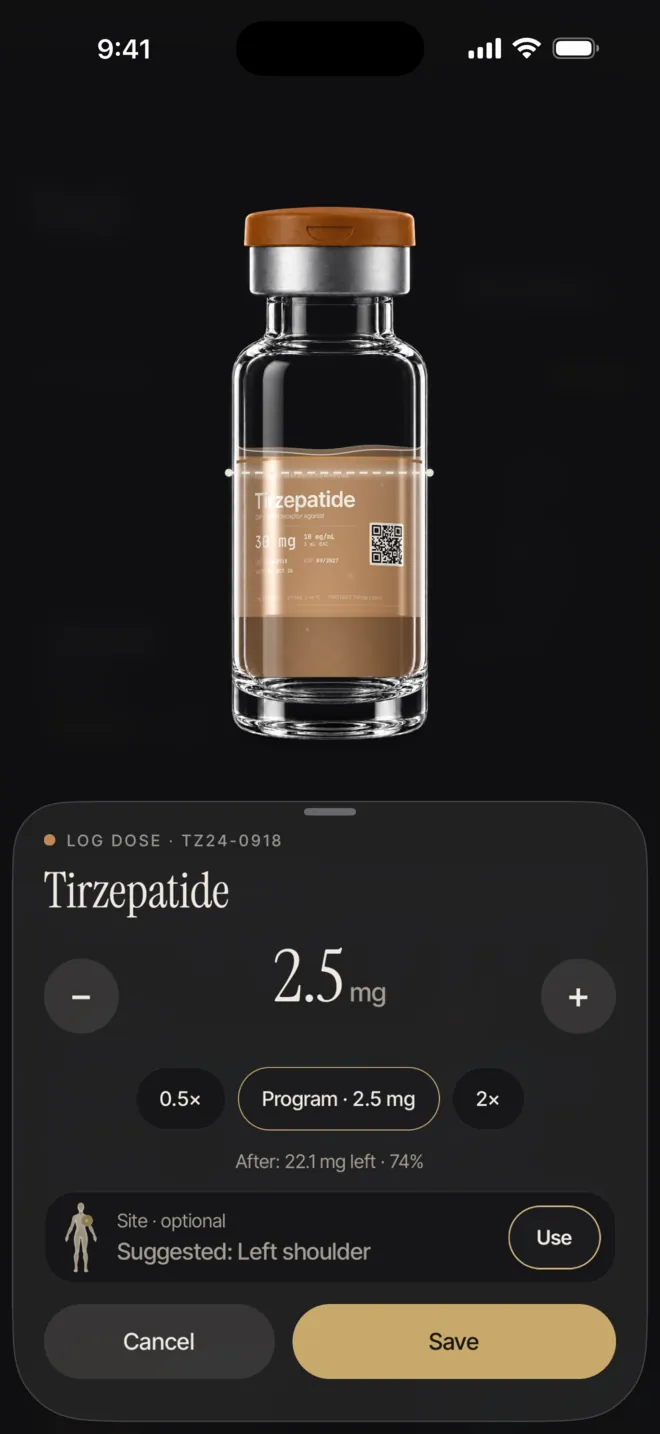
| Record each dose with the date, time and amount you enter, and the site for injections | Suggest a dose, a schedule change or a medicine |
| Remind you 15 minutes before, at the dose time, and 30 minutes after a missed dose | Tell you what to do after a missed dose; the leaflet and your prescriber do |
| Put check-ins, weight and doses on one timeline | Interpret symptoms or judge progress |
| Keep your records on your phone, with no account needed to track | Use analytics, advertising or tracking SDKs, or write to Apple Health |
| Create a PDF of your dose log for your clinician (Pro) | Replace your clinician or pharmacist |
